How to Handle Getting Sick Alone on a Solo Trip
Quick Answer: The practical steps are: stop moving, tell one person at home, extend your accommodation before you feel worse, hydrate deliberately, and know how to reach local care before you need it. The emotional part is harder and worth naming — being ill alone in an unfamiliar place is genuinely difficult and it is not a sign you should not be traveling alone. Most of the misery comes from trying to keep the itinerary rather than from the illness.
It is day four, you wake up wrong, and there is nobody in the room to tell. That is the actual experience, and it is worth having thought about once before it happens.

What do you do in the first hour?
Stop, assess honestly, and make the one decision that governs everything else.
Stop moving. The instinct is to push through the morning’s plan and see how you feel. This is almost always wrong and it reliably turns a one-day illness into a three-day one. You are not going to enjoy the museum, and you are going to be further from your bed when you need it.
Assess honestly, out loud if it helps. There is a genuine difference between the categories, and traveling alone tends to blur them:
- Rest-and-fluids illness: ordinary stomach upset, a cold, exhaustion, mild fever. Manage it yourself.
- See-someone illness: high fever, severe or persistent vomiting, inability to keep fluids down for more than several hours, severe pain, breathing difficulty, confusion, or anything that is getting worse rather than plateauing.
- Emergency: chest pain, difficulty breathing, severe allergic reaction, head injury, uncontrolled bleeding.
Extend your room now, not tomorrow. This is the highest-value thing in the first hour. Being asked to check out at 11am while genuinely ill is the worst version of this situation, and it is entirely avoidable by messaging reception before you feel worse. Most places accommodate it easily; the same request at 10:45 the next morning is much harder.
Then tell one person at home. Not a broadcast, one person. Give them your location, accommodation name, and the fact that you are unwell. You may not need them and you have now created a thread that exists.
This is general information, not medical advice — if anything is severe or worsening, get local medical care rather than reading.
How do you actually get medical care abroad?
More easily than most people expect, and the research takes ten minutes on a good day.
Pharmacies are the first stop in most of the world. In much of Europe, Latin America, and Asia, pharmacists have significant scope to advise and dispense, and a pharmacy visit resolves the majority of travel illness. Find the nearest one and go there before you consider anything more complicated.
Your accommodation is your best local resource. Hotel reception deals with this regularly and will usually know the nearest clinic, whether it takes walk-ins, and sometimes call ahead for you. Hosts on rental platforms are often equally helpful. Asking is not an imposition; it is a normal request.
Know the emergency number for where you are. It is not 911 everywhere — 112 across the EU and much of the world, 999 in the UK, 000 in Australia. Put it in your phone on arrival day, along with your accommodation’s address written in the local language.
Travel insurance: find the policy number and the assistance line before you travel and store them offline. Many policies have a 24-hour line that will direct you to an appropriate facility, and some require you to call before treatment for coverage to apply. Reading your policy while feverish is a bad experience.
Translation: have a translation app with the local language downloaded for offline use. Being able to show a sentence describing your symptoms removes an enormous amount of friction.
And for anything involving a language barrier and a real decision, go to a hospital rather than a small clinic. Larger facilities are far more likely to have someone who speaks English.
What should be in the bag before you leave?
A small kit that fits in a sandwich bag and covers the realistic scenarios.
The essentials:
- Oral rehydration salts. The single most useful item. Stomach illness plus heat is the classic solo travel problem, and plain water does not replace what you are losing. Sachets weigh nothing.
- Your usual pain and fever medication, in the form you know works for you.
- An anti-diarrheal and an antihistamine, both in the versions you have taken before.
- Any prescription medication in original packaging, with more days than the trip length, split across two bags.
- A thermometer, the small digital kind. Knowing whether you actually have a fever changes the decision more than any other single piece of information.
- Rehydration-friendly snacks: plain crackers, electrolyte tablets. Not glamorous, extremely useful at 3am.
The information to store offline before departure:
- Insurance policy number and assistance phone line
- Your blood type, allergies, and current medications, in a note on your phone and on paper
- The local emergency number and your embassy’s contact details
- Your accommodation address in the local language
Check medication legality for your destination. Some common over-the-counter drugs — certain decongestants and codeine-containing painkillers in particular — are restricted or illegal in some countries, and this catches travelers out every year. A two-minute search before you pack is worth it.
What Nobody Tells You About Being Ill Alone
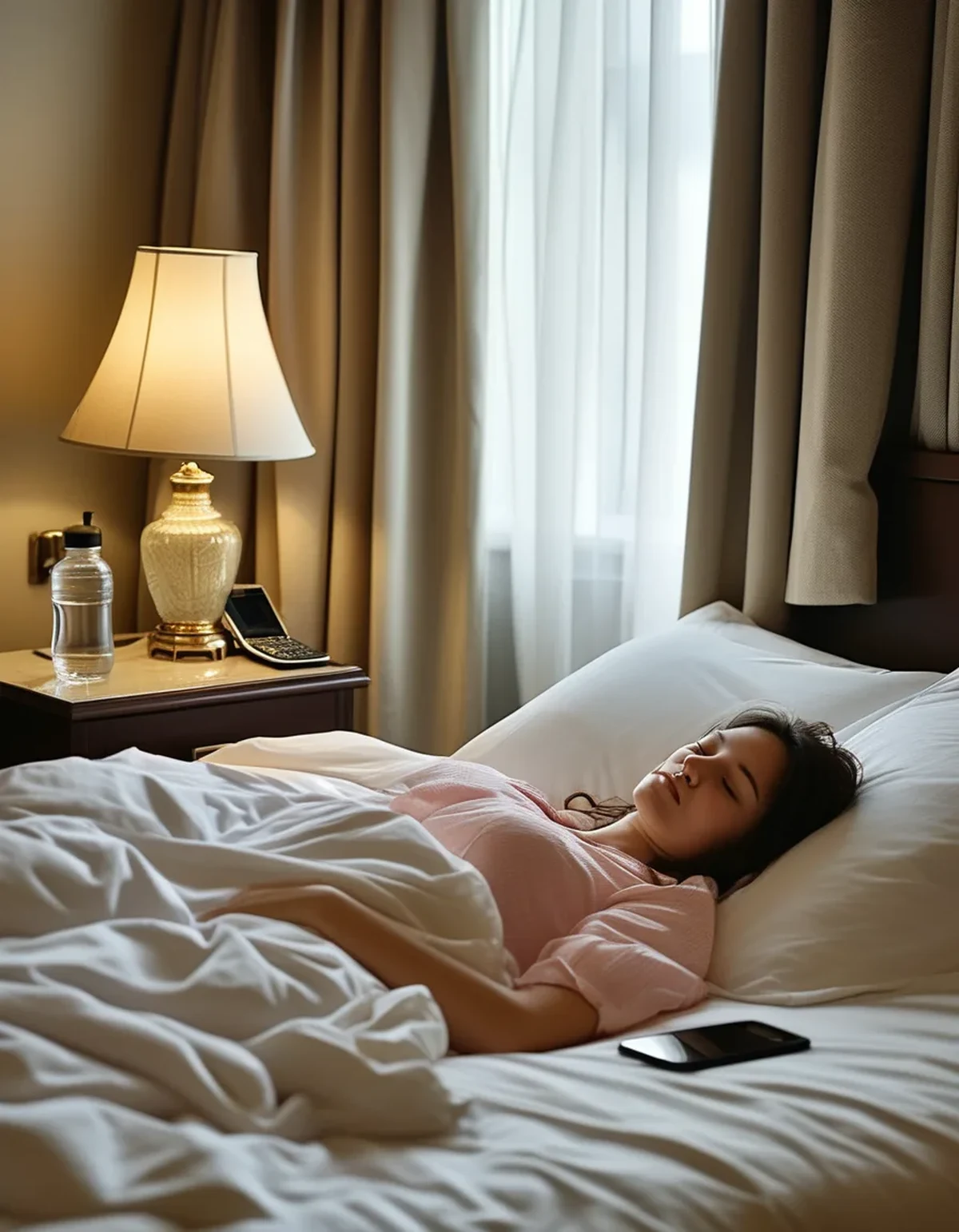
The loneliness is worse than the symptoms, and it peaks at night. During the day there are staff, noise, and things to do. At 2am in an unfamiliar room feeling awful, the absence of anyone who knows you is genuinely hard. Knowing in advance that this is the shape of it helps — it is a predictable low point, not a sign that anything is going wrong.
You will overestimate how sick you are, and also underestimate it. Both, at different hours. Without another person to calibrate against, small symptoms feel ominous at night and serious ones get rationalized in the morning. The thermometer is your outside opinion, which is exactly why it is worth carrying.
Calling home helps more than you expect and less than you want. A video call with someone familiar reliably improves how you feel and does not solve anything, and both of those are worth knowing. Call anyway.
Nobody at home can help with logistics, and they will try. A relative six time zones away searching for clinics is not useful and it makes them feel useful, which has its own value. Give them a job that is actually doable — looking up your insurance terms, or just checking in at a set time.
The trip is not ruined. This is the thought that does the most damage. Two days in bed out of ten is not a wasted trip, and the pressure to salvage the itinerary is what turns two days into five. The people who recover fastest are the ones who write off the days early rather than attempting a museum on day two.
Solo travelers get sick at about the same rate as anyone else. It is not a consequence of traveling alone. It is just more noticeable when there is nobody to hand you a glass of water.
How do you get back on your feet?
Slowly, and with a lower bar than you want.
Re-enter with one small thing. Not a full day. Walk to a café two streets away, sit down, come back. The first outing after being ill is about testing your energy, not about accomplishing something, and treating it as a test rather than a plan means it cannot fail.
Eat conservatively for longer than feels necessary. Plain, familiar, small portions. The temptation after a stomach illness is to celebrate recovery with the local food you came for. Give it another day — a relapse costs you far more than the delay.
Hydrate for two days past feeling better. Fluid deficits take longer to correct than symptoms take to resolve, and lingering fatigue is very often just dehydration.
Rebuild the itinerary honestly. You have fewer days. Choose the one or two things you actually came for and let the rest go. Trying to compress six days of plans into three is how people end up ill again, and it is a genuinely common pattern.
Change accommodation if it will help. If you have been in a windowless room for three days, moving somewhere brighter is not indulgent. The psychological reset is real.
And tell your person at home you are better, because they have been worrying and a two-line message closes the loop.
One last practical note: if you needed medical care, get the paperwork before you leave the country. Receipts, notes, and any prescription details. Claiming on insurance from home without documentation is much harder, and nobody wants to be emailing a foreign clinic six weeks later.
FAQ: Getting Sick Solo, Answered
Should I go home early?
Usually not, and the answer depends on trajectory rather than severity. If you are improving, staying put and resting is almost always better than the exhaustion of travel. If you are not improving after a few days, or you need care that is genuinely difficult to access where you are, going home is a reasonable call — and travel insurance sometimes covers a changed flight in that situation.
Is it safe to tell hotel staff I am traveling alone and unwell?
Generally yes, and it is usually the most useful thing you can do. Standard sensible precautions still apply — keep your door locked, do not let anyone into your room, and prefer having help brought to reception rather than to your door if you feel uneasy. Reputable accommodation deals with unwell guests constantly.
What if I cannot afford a doctor visit abroad?
Check your insurance first, since a great many travelers have coverage they have forgotten about through a credit card or an existing health policy. Pharmacies are dramatically cheaper than clinics and handle most of what travelers get. And in many countries, public emergency care costs far less than the American figure in your head — do not skip needed care based on an assumption about price.
TL;DR:
- Stop the itinerary immediately and extend your accommodation before you feel worse
- Tell one person at home, with your location and accommodation name
- Pharmacy first for most things; know the local emergency number and your insurance line before you need them
- Carry rehydration salts and a thermometer — the thermometer is your outside opinion when there is nobody to ask
- Expect the nights to be the hard part, and write off the lost days early rather than trying to salvage them
Almost all of this is decided before you leave. Ten minutes with your insurance documents and a sandwich bag of supplies converts a bad two days into an uncomfortable but entirely manageable one.
Keep Reading
This article is for general informational and styling purposes only. Fit, sizing, and product availability may vary.