Solo Travel Loneliness Hits at Specific Times, Not Randomly — Here's How to Plan Around It
Quick Answer: Solo travel loneliness reliably spikes during dinner hours and right after checking into a new place — not throughout the whole trip. Planning those specific windows (a group dinner tour, a call home at check-in) prevents most of the feeling before it starts.
Most of a solo trip feels fine — the museums, the walks, the sightseeing. Then dinner arrives and suddenly the whole trip feels harder than it should. That’s not the trip failing; it’s a predictable pattern almost every solo traveler hits.

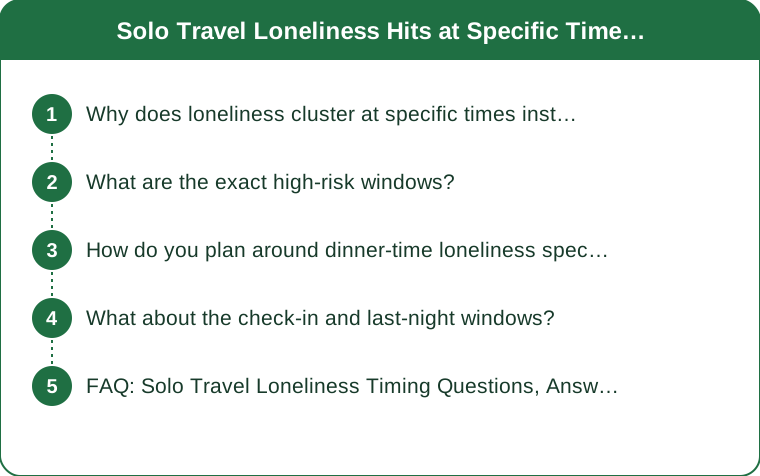
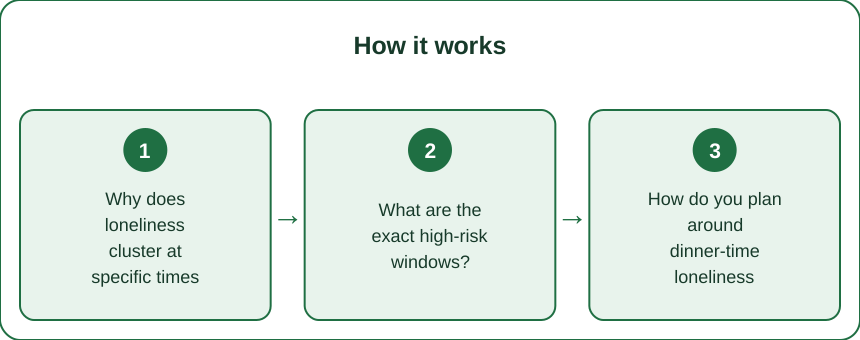
Why does loneliness cluster at specific times instead of spreading evenly?
Because loneliness on solo trips is tied to specific social cues being absent — dinner is culturally a shared activity, and evening arrival at a new place removes the day’s distraction and momentum all at once.
Daytime activities (sightseeing, walking, museums) keep attention outward; dinner and evening downtime turn attention inward, which is when the solo feeling actually surfaces.
What are the exact high-risk windows?
Three consistent patterns: dinner time (especially in restaurant cultures built around shared tables), the first hour after checking into new lodging (novelty wears off, tiredness sets in), and the last night of a trip (anticipatory loneliness before returning to routine).
Knowing these in advance turns them from ambush moments into plannable ones.

How do you plan around dinner-time loneliness specifically?
Book one group food tour or communal dining experience every few days — not every night, just enough to break the pattern regularly. Between those, sit at counter seating or bars rather than solo tables; it invites incidental conversation without requiring it.
Eating dinner earlier (local lunch-hour timing) also helps, since restaurants are less socially charged before the main dinner rush.
What about the check-in and last-night windows?
For arrival: schedule a call home or a short walk immediately after checking in, before unpacking triggers the tired/lonely combination. Treat it as a transition ritual, not an afterthought.
For the last night: book something specifically social (a class, a tour, a bar with communal tables) rather than leaving it open — an unplanned last night is when trip-ending loneliness peaks hardest.
FAQ: Solo Travel Loneliness Timing Questions, Answered
Does loneliness get better on longer solo trips?
Usually yes after the first few days, once a rhythm forms — the dinner and arrival patterns persist, but the intensity generally softens with practice.
Is eating alone at a restaurant actually as awkward as it feels?
Most people report it feels far more noticeable to themselves than to anyone else in the room — the self-consciousness fades faster with repetition than expected.
Should I avoid solo trips if loneliness hits hard for me?
Not necessarily — targeting the specific windows above resolves most of it for many travelers. If loneliness feels overwhelming rather than situational, that’s worth addressing before the trip, not during it.
TL;DR:
- Loneliness clusters at dinner, arrival, and the last night — not the whole trip
- Book a group meal every few days, not every night
- Give arrival a transition ritual (a call, a walk) before it turns into isolation
- Plan the last night specifically instead of leaving it open
Map those three windows before you go, and the rest of the trip usually takes care of itself.
Keep Reading
This article is for general informational and styling purposes only. Fit, sizing, and product availability may vary.