Why You Freeze Outside Restaurants When Traveling Solo (And How to Walk In Anyway)
Quick Answer: The hesitation outside a restaurant door usually comes from imagining being watched and judged, not from anything that actually happens once inside — most solo diners report the anxious anticipation is worse than any real reaction from staff or other guests.
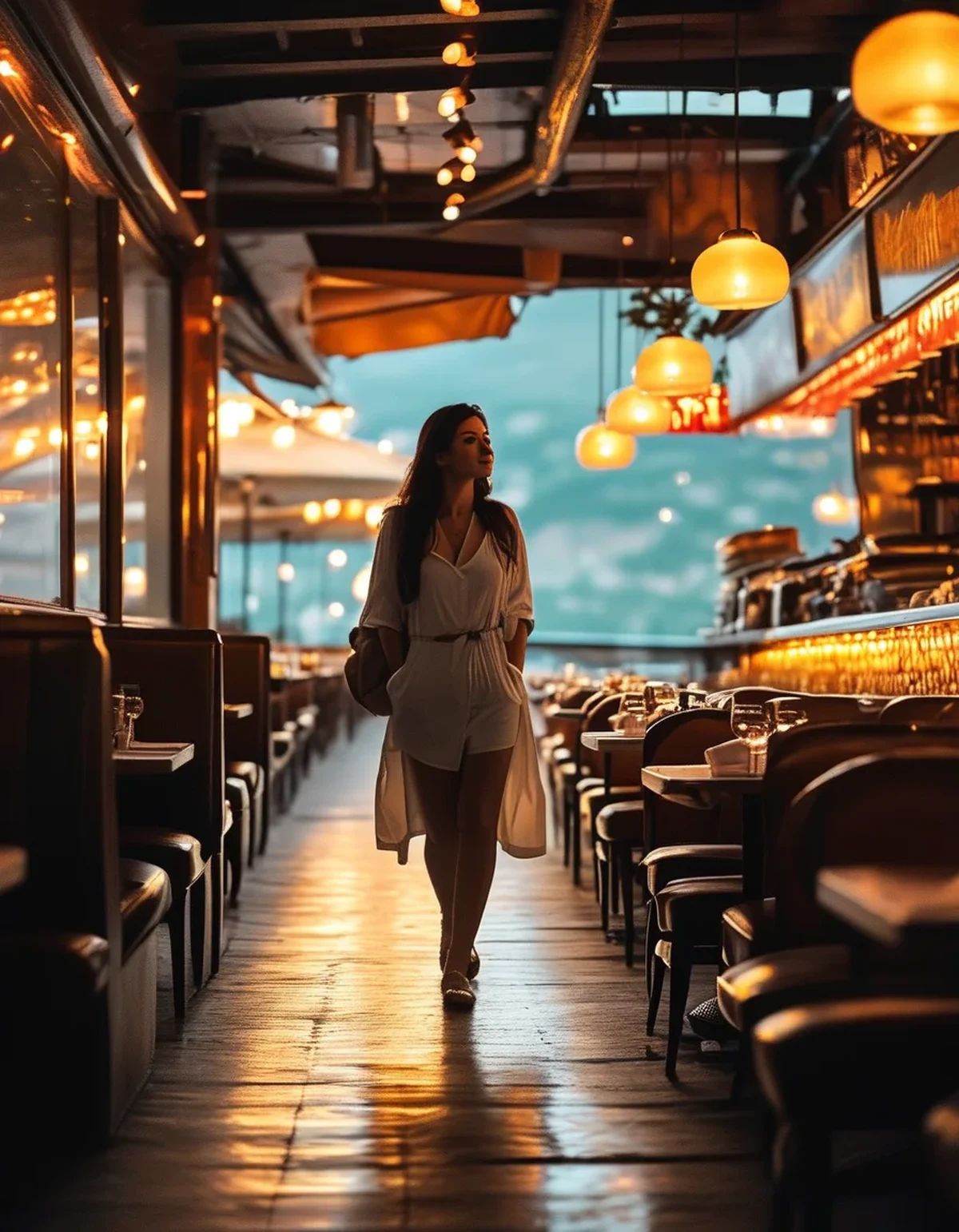
You’ve walked past the same restaurant three times now, working up the nerve. This exact moment trips up more experienced solo travelers than almost anything else on a trip.
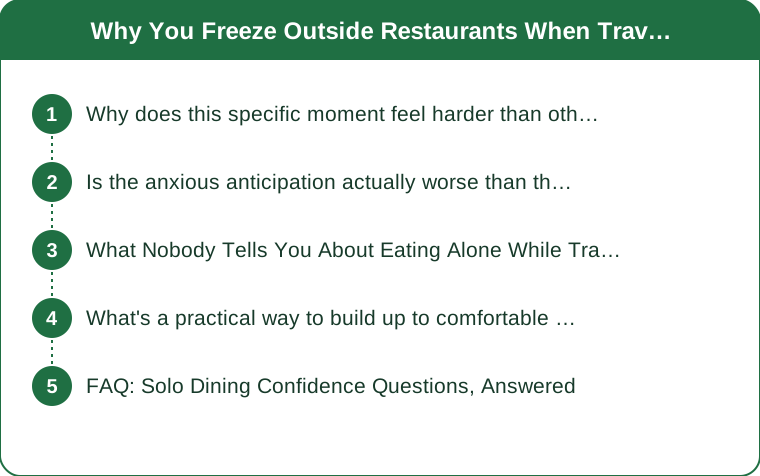
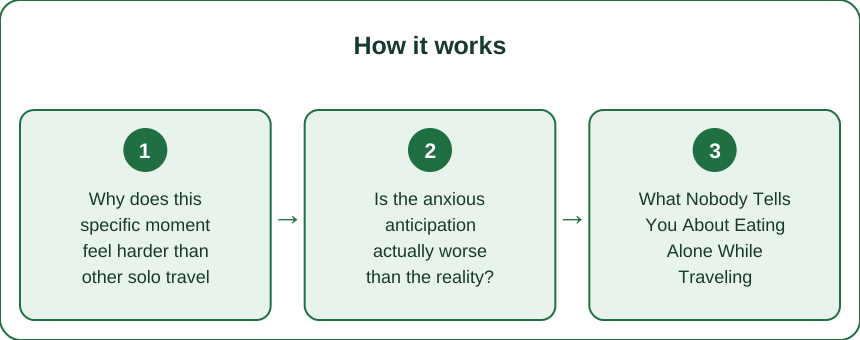
Why does this specific moment feel harder than other solo travel moments?
Walking into a restaurant alone involves a brief, public, visible moment where you’re being seen and assessed by a host or hostess, unlike quieter solo activities like sightseeing or walking. That short window of visibility is disproportionately anxiety-inducing compared to how briefly it actually lasts — most of the discomfort is concentrated in those first ten seconds.
This is a genuinely common reaction, not a sign of being bad at solo travel — many seasoned solo travelers report this specific moment stays uncomfortable even after years of otherwise confident solo trips.
Is the anxious anticipation actually worse than the reality?
For most people, yes, significantly — restaurant staff in tourist and business-traveler-heavy areas see solo diners constantly and rarely react with anything beyond a normal, professional greeting. The imagined scrutiny (assuming other diners are judging you) is almost always more intense than any real reaction, since most other diners are focused on their own meals and conversations, not on you.
This gap between anticipation and reality tends to shrink each time you push through it — the first few solo restaurant visits on a trip are usually the hardest, and it gets measurably easier by the third or fourth.
What Nobody Tells You About Eating Alone While Traveling
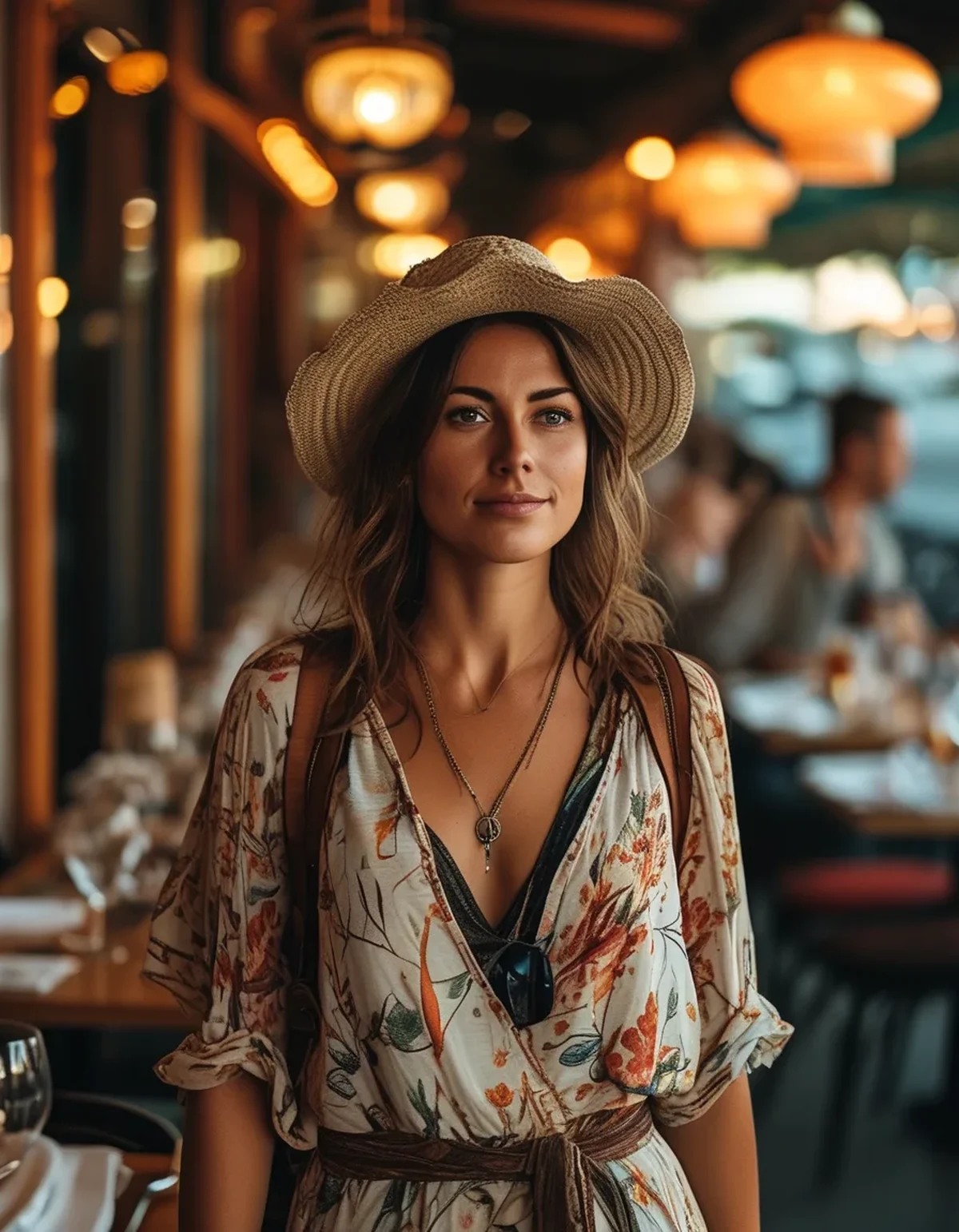
A book, journal, or phone isn’t a crutch — most solo travelers use one, and it’s a completely normal, expected part of dining alone rather than something that marks you as awkward. Staff and other diners are used to seeing solo travelers occupied with something during a meal; it’s far more common than sitting and staring at the wall.
Another thing rarely mentioned: lunch is an easier entry point than dinner for building solo dining confidence, since lunch crowds are more casual and less date-or-group-centric than a typical dinner service, making the atmosphere feel less spotlighted.
What’s a practical way to build up to comfortable solo dining?
Start with counter service or casual, quick-turnover spots rather than a sit-down dinner reservation on day one — lower-stakes settings build the muscle before you try a fuller restaurant experience. Requesting a seat at the bar, where solo dining is culturally more normalized in many places, is another lower-pressure entry point than a table in the main dining room.
By the middle of a trip, most people who started anxious report the hesitation has measurably faded — treating the first couple of solo meals as practice, rather than expecting immediate comfort, sets a more realistic and forgiving bar.
FAQ: Solo Dining Confidence Questions, Answered
Is it weird to ask for a table for one?
No — restaurant staff see this request constantly and it’s treated as completely routine, especially in areas with regular tourist or business traveler traffic.
Should I bring something to occupy myself during a solo meal?
Yes, if it helps you feel comfortable — a book, journal, or phone is normal and common practice, not something that signals awkwardness to others.
Does the anxiety about eating alone ever fully go away?
For many people it fades substantially with repeated practice, though some report the initial ten-second walk-in moment stays mildly uncomfortable even after years of solo travel.
TL;DR:
- The anxious anticipation before walking in is almost always worse than the actual experience
- Most staff and diners are focused on themselves, not scrutinizing a solo diner
- Bringing a book or journal is normal, not a sign of awkwardness
- Start with casual, quick-turnover spots or bar seating to build confidence gradually
Next solo trip, pick one low-stakes lunch spot to practice on first — the confidence built there carries over to harder dinner reservations later in the trip.
Keep Reading
This article is for general informational and styling purposes only. Fit, sizing, and product availability may vary.