The 'Table for One' Anxiety Nobody Warns You About Before Solo Travel
Quick Answer: Table-for-one anxiety is common and almost entirely about a perceived spotlight that doesn’t actually exist — other diners are far less focused on you than it feels. Bringing a small activity, choosing the right seat, and picking lower-pressure restaurant types for the first few solo meals makes it noticeably easier.
Nobody prepares you for the specific discomfort of standing at a host stand alone saying “just one” for the first time. It’s a real adjustment — but a short one, and it gets dramatically easier after just a handful of meals.
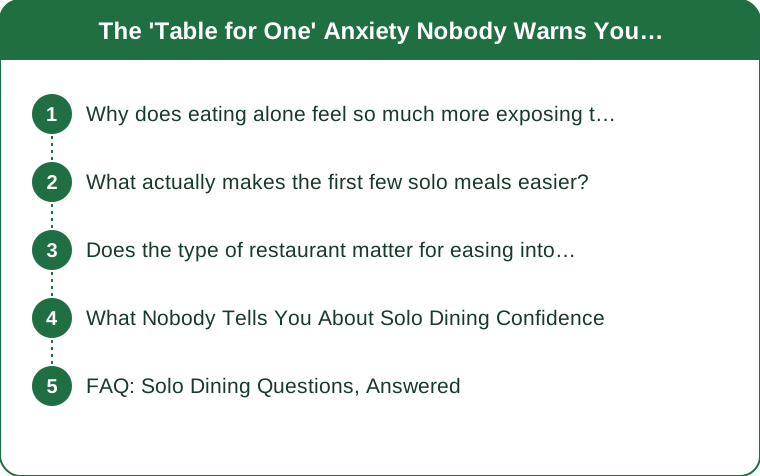
Why does eating alone feel so much more exposing than other solo activities?
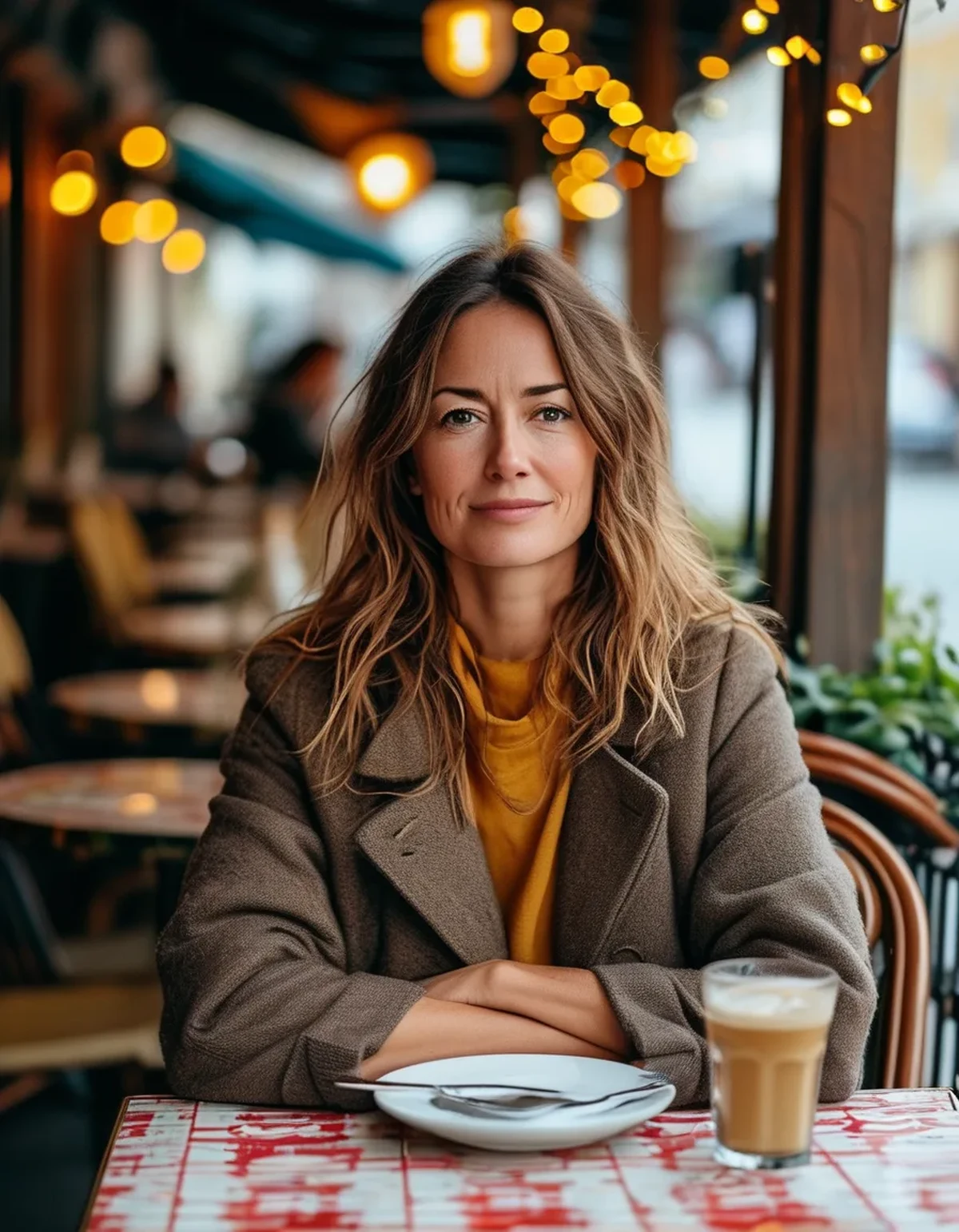
Restaurants are one of the few public spaces explicitly designed around groups and conversation, so sitting alone feels like breaking an unspoken social script — even though plenty of people eat alone regularly (business travelers, locals grabbing a quick meal, other solo travelers).
The spotlight effect is doing most of the work here — a well-documented psychological pattern where we dramatically overestimate how much other people notice and judge us. In reality, most other diners are absorbed in their own meals and conversations, not tracking your table.
What actually makes the first few solo meals easier?
Bring something to do — but not necessarily your phone. A book, journal, or even people-watching gives your hands and eyes a natural focus point, which reduces the feeling of being watched far more than sitting with nothing to do. Phone use works too, but a book reads as more intentional and less like hiding.
Choose counter seating, bar seating, or a small cafe table over a large empty table for four — a big empty table can feel more exposed than a bar seat naturally positioned for one or two people.

Does the type of restaurant matter for easing into solo dining?
Significantly, especially for your first few solo meals. Casual cafes, food markets, counter-service spots, and bars with bar seating are naturally built for solo diners and feel far less exposing than a formal sit-down restaurant with only large tables.
Save reservation-only, formal restaurants for after you’ve built a little solo-dining confidence — there’s no rule you need to start there, and starting with lower-pressure spots builds the skill faster.
What Nobody Tells You About Solo Dining Confidence
The awkwardness front-loads almost entirely into the walk to your table and the first few minutes seated — it fades fast once your food or drink arrives. Most solo travelers report the anticipation is worse than the actual experience, every single time, which is useful to remember on meal three when you’re dreading meal four.
Staff in tourist-heavy areas see solo diners constantly and don’t think twice about it — the anxiety is almost entirely self-generated, not externally reinforced by how you’re actually treated.
FAQ: Solo Dining Questions, Answered
Is it rude to ask for a specific seat as a solo diner?
Not at all — asking for counter or bar seating, or a smaller table, is a completely normal request and hosts accommodate it constantly.
Does eating alone get easier with practice, or does it stay uncomfortable?
It gets easier fast — most solo travelers report a noticeable shift by their third or fourth solo meal, often within the same trip.
Is it okay to just get food to go instead of sitting down if I’m not ready?
Completely fine — there’s no requirement to push through discomfort on day one; easing in with takeout or counter service for the first meal or two is a reasonable, valid approach.
TL;DR:
- Table-for-one anxiety is driven by the spotlight effect — you’re noticed far less than it feels
- Bring a book or journal, and choose counter or bar seating over an empty large table
- Casual, counter-service spots are an easier entry point than formal reservation restaurants
- The discomfort front-loads into the first few minutes and fades once food arrives
This specific anxiety is one of the fastest solo-travel skills to build — most people are surprised how quickly it stops feeling like a big deal.
Keep Reading
This article is for general informational and styling purposes only. Fit, sizing, and product availability may vary.