What to Do When Your Solo Trip Plan Falls Apart Mid-Week
Quick Answer: Alone, a disrupted plan hits harder because there is no one to share the decision, no one to reassure you it is fine, and no external structure to fall back on. The fix is procedural: solve the sleeping arrangement first, then the food, then the plan - in that order, and never the reverse. Most solo trip spirals happen because someone tried to rebuild the itinerary while still not knowing where they were sleeping. Bed, then food, then plans.
The problem is rarely the cancellation.
It is trying to solve everything at once with nobody to divide it with.

Why does disruption feel so much bigger when you are alone?
Because travelling with someone quietly does three jobs you only notice when they are gone.
There is nobody to split the problem with. With a companion, one person queues while the other searches for alternatives. Alone, everything is sequential - and sequential problem-solving under time pressure is where mistakes happen.
There is no reality check. A friend saying it is fine, we will just get the later one is doing genuine emotional work. Alone, a small setback can escalate unchallenged because no one is there to put it in proportion.
And the decision is entirely yours to own. With a companion, a poor choice is shared. Alone, every option comes with the awareness that the consequences are yours - which makes people slower and more risk-averse at the exact moment speed helps.
Fatigue amplifies all of it. Solo travel involves more low-level vigilance than travelling with someone, so by mid-week you are working from a smaller reserve than you would be at home.
And the sunk cost bites harder. You planned this alone, you paid for it alone, and a disrupted day feels like a personal failure rather than bad luck. It is bad luck. Everyone’s trips break somewhere.
Knowing the mechanism helps. The feeling is disproportionate to the problem, and recognising that is most of the recovery.
What is the correct order to fix things in?
Bed, food, plan - and the order matters far more than the speed.
Secure where you are sleeping tonight, before anything else. Nothing else can be thought about clearly while that is open. Even an expensive, imperfect, refundable booking made in the first ten minutes is worth it purely for the cognitive space it frees.
Then eat something. Decision quality drops sharply when you are hungry and tired, and mid-disruption is exactly when people skip meals. Twenty minutes and a proper meal will improve every subsequent decision more than twenty minutes of frantic searching.
Then, and only then, rebuild the plan. With a bed and a meal secured, the itinerary problem shrinks to what it actually is: an inconvenience about how you spend some hours.
Rebuild small. One thing for tomorrow morning, not a reconstructed week. Over-planning in a state of stress produces itineraries you will resent.
Let the trip be shorter or simpler than intended. Cutting a destination is a legitimate outcome. Trips that get rescued by compressing everything into fewer days are rarely enjoyed.
And write down what is now booked and confirmed. Under stress, memory for logistics gets unreliable, and re-checking the same three things repeatedly is its own drain.
What practical moves actually help in the moment?
A short list that solves most solo travel disruptions, in order of usefulness.
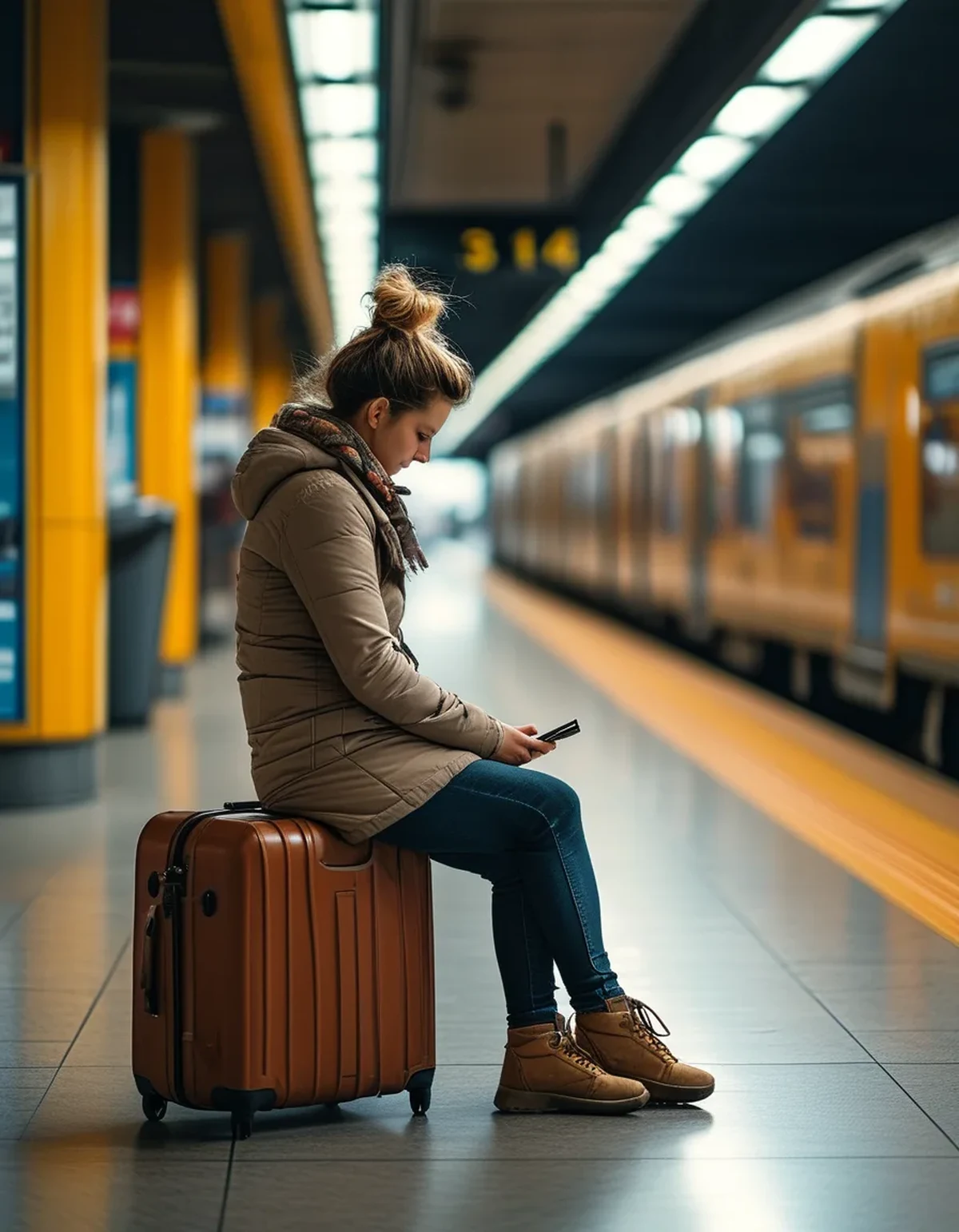
Go somewhere with a seat, wifi, and a bathroom. A cafe, a hotel lobby, a station lounge. Solving problems standing in a concourse with a bag on your shoulder is unnecessarily hard.
Deal with people in person where possible. Ticket desks, hotel receptions, and tourist information offices frequently have options and discretion that apps do not. In-person requests get flexibility that online forms do not.
Ask a local staff member the open question. What would you do. Where would you go instead. Front desk staff and cafe owners give better recommendations than any list, and they know what is actually open today.
Check whether the disruption is regional. One cancelled train may mean a whole line is out. Knowing the scope before rebooking prevents the sequel of booking straight into the same problem.
Take the earlier option, not the better one. In a disrupted system, an available departure now beats a preferable one later that may also fall through.
Message one person at home. Not for help - for the reality check that having a companion would provide. Two minutes of contact does a surprising amount for proportion.
And keep every receipt and screenshot. Travel insurance and carrier compensation both require documentation you cannot recreate later, and this is the moment to collect it.
What Nobody Tells You About Solo Trip Disruptions
The disrupted days are the ones you remember. The improvised afternoon and the town you ended up in by accident are what get retold. The perfectly executed itinerary blurs into itself.
Mid-trip is when it hits hardest, and that is not a coincidence. Days three to five combine accumulated tiredness with the loss of arrival novelty, and any setback lands into that dip. Knowing the dip exists makes it much easier to sit through.
Being alone is a genuine advantage once the panic passes. You can change everything without negotiation, take the last single seat, and eat at 4pm. Solo travellers get flexibility that pairs and groups simply do not have.
Most people massively over-plan the first half and under-plan the second. So a disruption in the second half is usually cheaper to absorb than it feels - there was less committed than you think.
Refunds are more available than the website suggests. Politely asking a human, in person, works far more often than accepting the automated answer. The worst outcome of asking is the answer you already had.
And the loneliness spike during a disruption is about the problem, not the trip. It passes once the bed is booked. Do not make a decision about cutting the trip short while the sleeping arrangement is still unresolved - that decision, made at that moment, is almost always regretted.
FAQ: Solo Trip Disruption Questions, Answered
Should I just go home if the trip falls apart?
Not on the same day. Solve the bed, eat, sleep, and decide tomorrow morning - the decision made mid-disruption and the one made after a night’s sleep are frequently different, and the morning one is usually right.
How much buffer should I build into a solo itinerary?
More than you would for a group trip, because you absorb every problem alone. One genuinely unplanned day per week and no back-to-back tight connections removes most of the fragility for very little cost.
What should I always have that makes disruption easier?
A charged power bank, an offline map of the area, a screenshot of your bookings, and enough local cash for a taxi and a meal. Every one of these matters specifically when your phone or the network is the thing that failed - which is a large share of the time.
TL;DR:
- Disruption feels bigger alone because nobody splits the problem, reality-checks you, or shares the decision.
- Fix in strict order: bed, then food, then plan. Never rebuild the itinerary before you know where you are sleeping.
- Get a seat, wifi, and a bathroom first, then deal with people in person rather than apps.
- Rebuild small - tomorrow morning, not the whole week - and let the trip be simpler than planned.
- Never decide to end a trip while the sleeping arrangement is unresolved.
Before your next trip, put a screenshot of every booking and one offline map on your phone. It is ten minutes that changes the worst afternoon of the trip.
Keep Reading
This article is for general informational and styling purposes only. Fit, sizing, and product availability may vary.