Why the Cheapest Flight Usually Costs More on a Solo Trip
Quick Answer: Costs that a group splits are costs a solo traveller carries alone, and cheap flights generate exactly those costs: awkward arrival times, distant airports, and gaps that need filling. A late arrival that would mean a shared taxi and a shared room instead means a solo taxi at night, a full price room, and often a wasted day. Compare the total door to door cost, not the fare.
Solo travel changes the arithmetic of every shared cost, and flights are where it starts.
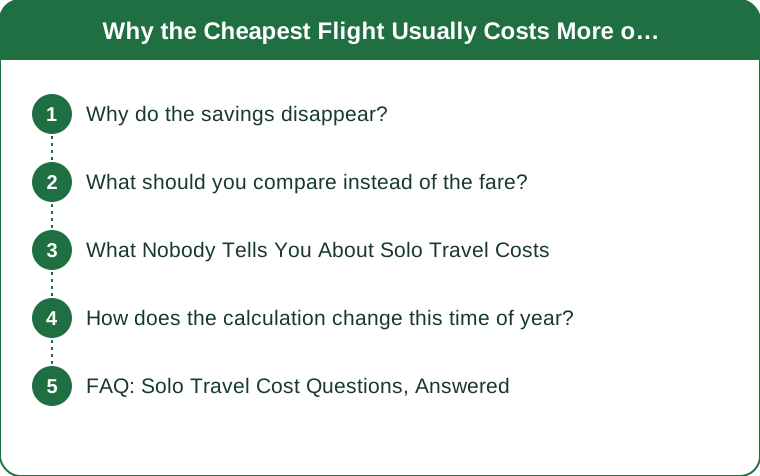
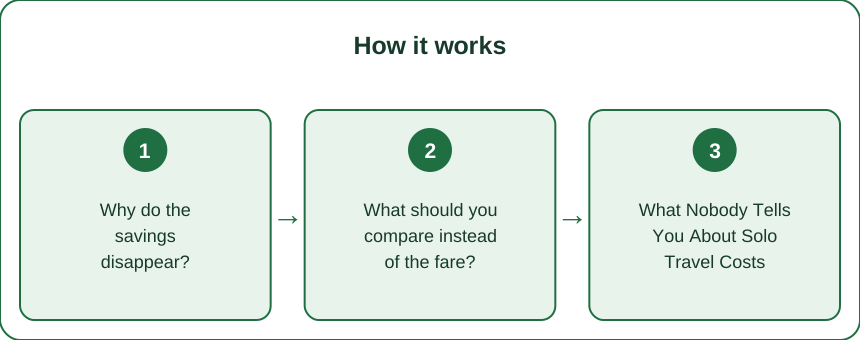
Why do the savings disappear?
Because a cheap fare buys an inconvenient itinerary, and inconvenience has a price that a solo traveller pays at full rate.
Budget fares are cheap for specific and predictable reasons: unpopular times, secondary airports, long layovers, and no flexibility. Each of those pushes costs somewhere else in the trip.
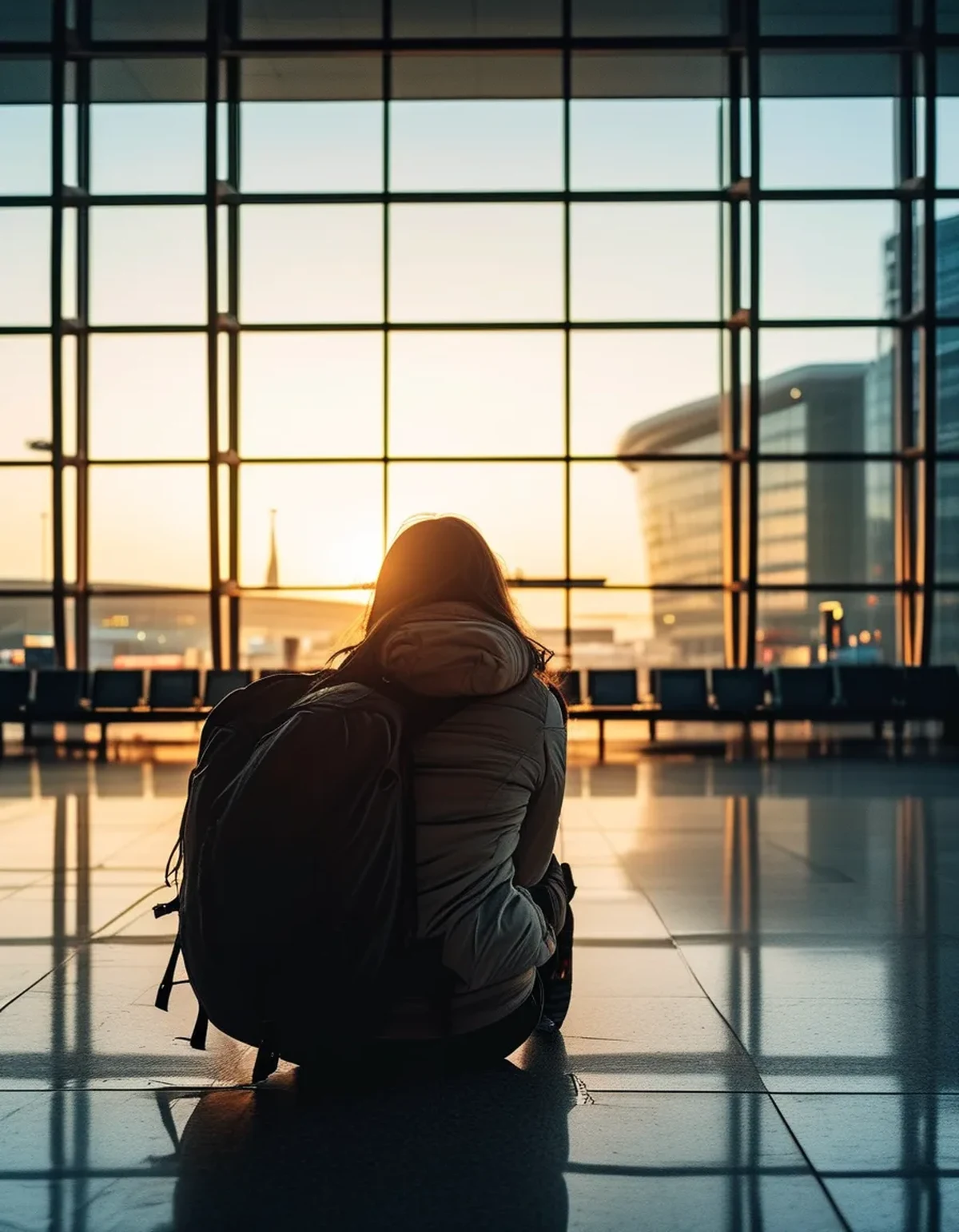
Arrival time is the biggest one. A flight landing at eleven at night means either a night’s accommodation you would not have needed, or an expensive transfer at an hour when public transport has stopped. Two travellers split that taxi; one traveller does not. The same is true for the room, since a single room usually costs a large proportion of a double.
Secondary airports cost time and money. An airport ninety minutes from the city means a transfer at both ends, potentially in each direction, and the transfer often costs more than the fare saving on its own.
Long layovers eat a day. For a short trip, a seven hour connection each way is a meaningful fraction of the holiday, and the value of that time is real even though it does not appear on any invoice.
Baggage and seat fees close the gap. The headline fare is frequently for a passenger with a small bag and no seat preference, and by the time the actual trip is booked the difference has narrowed considerably.
And there is a solo specific factor that is easy to miss. You have no one to share the waiting with, no one to watch your bag while you eat, and no one to split a room at four in the morning. The soft costs of an awkward itinerary are simply higher alone.
What should you compare instead of the fare?
Total door to door cost and total door to door time. Two numbers, and they change the ranking of most options.
Add every transfer at both ends. Airport to accommodation, in local currency, at the actual time you will arrive. Late night rates apply, and in many cities they are substantially higher.
Add any night of accommodation the timing forces. An arrival after midnight often means paying for a night you barely use, and a departure at six in the morning can mean the same in reverse.
Add the cost of the time. For a four day trip, a day lost in transit is a quarter of the holiday. Put a number on it, even a rough one, or the comparison is not honest.
Add the bags, seat selection, and any card fees. The final checkout number, not the search result.
Then the practical solo considerations:
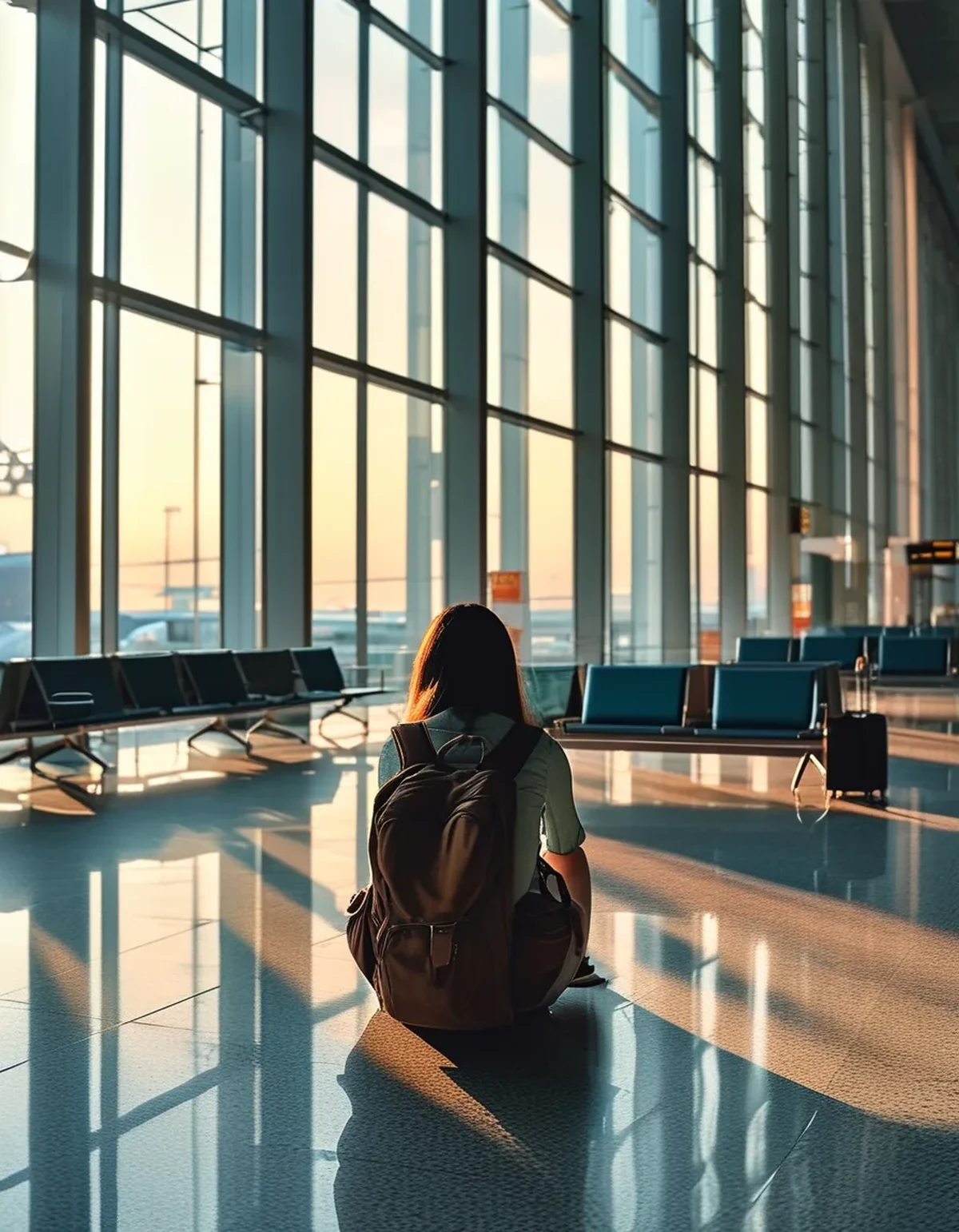
Arriving in daylight is worth paying for. It is easier, safer, and considerably less stressful to find accommodation in an unfamiliar city in daylight than at one in the morning alone. For a solo traveller this is a genuine value, not a preference.
Direct flights are worth more than they cost on short trips. Fewer failure points, no missed connection, no separate bag transfer.
Flexibility has a price and it is sometimes worth paying. A non refundable fare on a tight connection is a bet, and solo travellers absorb the loss alone when it fails.
A reasonable rule: if the saving is under about the cost of one night’s accommodation plus a taxi, the cheaper fare is probably not cheaper.
What Nobody Tells You About Solo Travel Costs
The single supplement is not just a hotel thing. Tours, cabins, transfers, and rental cars all price around two people. Budgeting a solo trip at half a couple’s budget is the most common planning error there is, and it usually runs about seventy percent rather than fifty.
Accommodation location matters more when alone. A cheaper place twenty minutes further out means more journeys, more late night transport, and more logistics you handle entirely yourself. The saving often disappears into taxis within three days.
Eating alone is more expensive per person than eating in a group. No sharing plates, no splitting a bottle, and restaurants price for two. Markets, counters, and lunch as the main meal all help.
The first day is the most expensive day. You have no orientation, no local knowledge, and no idea what things should cost, so you overpay. Arriving rested and in daylight materially reduces this, which is another argument against the cheap red eye.
Shoulder season is where solo travel actually gets cheaper. Fewer minimum stay requirements, more availability of single rooms, and better prices generally.
Travel insurance is not optional when alone. There is nobody to sort things out on your behalf if something goes wrong, and the cost of the policy is small relative to what it covers.
How does the calculation change this time of year?
Considerably, and mostly in your favour if you are travelling in the next couple of months.
Shoulder season is the best value window of the year for solo travel, and it starts as the summer peak ends. Prices drop, crowds thin, and single rooms become far easier to get without a supplement because properties are no longer full of couples and families.
What changes as autumn arrives:
Daylight shortens fast, which changes the value of arrival times. A flight landing at seven in the evening lands in daylight in August and in full darkness by late October. The same itinerary becomes a different proposition over a few weeks, and it is worth checking actual sunset times at your destination rather than assuming.
Weather disruption rises. Autumn storms mean more delays and cancellations, which raises the value of direct flights and of a little flexibility. A tight connection in October is a worse bet than the same connection in July.
Off season transport schedules thin out. Regional buses, ferries, and shuttle services often cut frequency after the summer, so the cheap transfer you found in a summer blog post may not exist in November. Check current timetables rather than last year’s.
Accommodation flexibility improves. Outside peak season it is easier to book a night at short notice, which lowers the risk of a plan changing and reduces the pressure to lock everything in.
A few practical moves for the season:
Book arrivals for daylight, and treat that as a firm constraint.
Take the flexible fare if the difference is modest, because disruption is more likely now.
Check what closes. Many destinations reduce hours or shut attractions after the summer, and a cheap trip that arrives after everything has closed for the season is not a bargain.
General safety practice applies more, not less, in the dark: share your itinerary with someone, use booked transport at night, and keep the first night’s arrival simple.
FAQ: Solo Travel Cost Questions, Answered
Are budget airlines worth it for solo travellers?
Often yes, when the airport is convenient and the timing is reasonable. The fare is rarely the problem; the awkward arrival time and the distant airport are, and those hit a solo traveller harder because nothing is shared.
How much more does solo travel cost than travelling as a pair?
Commonly around seventy percent of a couple’s per trip cost rather than fifty, because accommodation, transfers, and tours are priced for two. Budgeting at half is the usual mistake.
Is a red eye ever worth it alone?
Sometimes, if you can genuinely sleep on planes and your accommodation allows early check in. If not, you pay in a lost first day and an expensive, disorientated arrival, which is worse alone than in company.
What is the best value time to travel solo?
Shoulder season, which is starting now in most northern hemisphere destinations. Better prices, fewer single supplements, more availability, and far less competition for the good small rooms.
TL;DR:
- Cheap fares generate transfers, extra nights, and lost days, and a solo traveller pays all of those at full rate instead of splitting them.
- Compare total door to door cost and time, including late night transfers and any night the timing forces you to book.
- Solo trips typically run around seventy percent of a couple’s cost, not half, so budget accordingly.
- Shoulder season starting now is the best value window, but daylight shrinks fast, so check sunset times before booking an arrival.
Before you book the cheaper fare, price the taxi from that airport at that hour. It usually settles the question.
Keep Reading
This article is for general informational and styling purposes only. Fit, sizing, and product availability may vary.